

- info@womensun.com
- 8:00 - 4:30, Friday & Sunday - CLOSED
Oct
- by admin
- 0 Comments
Results of the E-Commerce and Women-Owned Small Businesses Survey Analysis
Survey Analysis Results
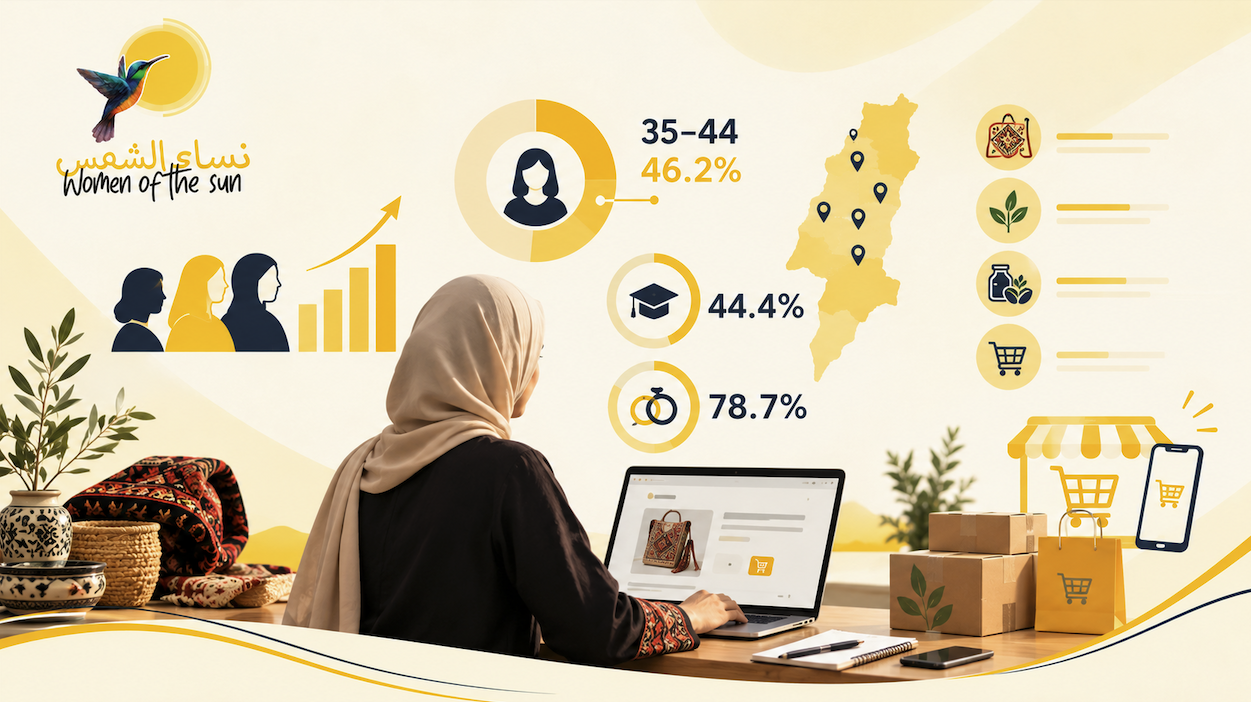
The results showed that the largest age group among the participants was 35–44 years, accounting for 46.2%, followed by the 25–34 age group at 24.9%, and the 45–54 age group at 19.5%. This indicates relatively high participation among women in the active economic and business management age groups.
Geographically, the participants were distributed across several governorates, with the highest percentage coming from Bethlehem at 26.6%, followed by Tulkarm at 20.7%, Hebron at 15.4%, Jenin at 10.7%, Nablus at 10.1%, and Tubas at 5.9%.
In terms of educational attainment, women holding a bachelor’s degree constituted the largest group at 44.4%, followed by participants with a high school education or below at 27.2%, and those holding a diploma at 22.5%.
The data showed that 78.7% of the participants were married, compared to 11.2% who were single.
The types of businesses managed by the participants varied. Handicraft and heritage-based businesses accounted for 26%, followed by productive businesses and agricultural and food-related businesses, each representing 20.1%, while commercial businesses accounted for 17.2%.
Regarding business age, the largest proportion of businesses had been operating for one to three years, accounting for 39.6%. Businesses operating for less than one year represented 22.5%, while those operating for more than six years accounted for 21.3%. This reflects the significant presence of businesses in their early establishment and growth stages.
In terms of the number of women or individuals involved in the businesses, 55.6% of the participants reported that their businesses employed between two and five people, while 40.8% of the businesses were operated by only one person.
The evaluation statements revealed a clearly positive attitude among participants toward the importance of e-commerce and digital product marketing. For one of the statements, the combined percentage of participants who agreed or strongly agreed reached 73.9%, while 13% remained neutral and approximately 13% disagreed.
The results also demonstrated a high level of awareness of the importance of using digital tools and platforms to develop businesses, with agreement and strong agreement rates ranging from approximately 59% to 74% across several statements.
However, some areas showed higher levels of neutrality or disagreement, indicating potential challenges or gaps in experience and capacity to use e-commerce effectively. For one of the statements, 21.3% of participants expressed a neutral position, 40.3% disagreed or strongly disagreed, and 38.5% agreed or strongly agreed.
Several subsequent indicators continued to reflect positive attitudes toward e-commerce, with agreement and strong agreement rates reaching 74.5%, 75.1%, and 66.9% in some statements. These results reflect the participants’ recognition of the role of digital marketing in supporting small businesses.
At the same time, neutral responses remained notable across several indicators, ranging from 22.5% to 32% in some statements. This suggests that some participants still require additional practical knowledge and specialized training before fully adopting certain e-commerce tools.
The results also indicate a need to strengthen the practical aspects of e-commerce, rather than focusing solely on raising awareness of its importance. The varying levels of agreement, neutrality, and disagreement across several statements related to practice and implementation highlight the need for more hands-on support.
One particularly positive finding was the high level of agreement and strong agreement with one of the statements, reaching 75.7%, while 18.3% of participants were neutral and only 6% disagreed. This reflects a strong inclination among participants toward the importance of a particular aspect of digital business development.
Conclusion
Overall, the survey results reflect a solid base of women-owned small businesses, with a significant presence of handicraft and heritage-based, productive, agricultural, food-related, and commercial businesses. The findings also demonstrate a high level of awareness of the importance of e-commerce and digital marketing. However, the notable proportions of neutral and disagreeing responses in some areas indicate the need to move beyond general awareness toward developing practical skills in creating online stores and digital platforms, digital marketing, market access, sales management, and product promotion.
The findings support the importance of designing economic empowerment programs that focus on transitioning women-owned businesses from local markets to digital and national markets, while providing practical training, ongoing follow-up, and sustained marketing support.
نتائج تحليل استبيان التجارة الإلكترونية والمشروعات الصغيرة المملوكة للنساء
نتائج تحليل الاستبيان
أظهرت النتائج أن الفئة العمرية الأكبر بين المشاركات كانت 35–44 عامًا بنسبة 46.2%، تلتها الفئة العمرية 25–34 عامًا بنسبة 24.9%، ثم الفئة العمرية 45–54 عامًا بنسبة 19.5%. ويشير ذلك إلى ارتفاع مستوى مشاركة النساء في الفئات العمرية النشطة اقتصاديًا وفي إدارة الأعمال.
جغرافيًا، توزعت المشاركات على عدد من المحافظات، حيث جاءت أعلى نسبة من بيت لحم بنسبة 26.6%، تلتها طولكرم بنسبة 20.7%، ثم الخليل بنسبة 15.4%، وجنين بنسبة 10.7%، ونابلس بنسبة 10.1%، وطوباس بنسبة 5.9%.
وفيما يتعلق بالمستوى التعليمي، شكّلت النساء الحاصلات على درجة البكالوريوس النسبة الأكبر، حيث بلغت 44.4%، تلتها المشاركات الحاصلات على شهادة الثانوية العامة أو أقل بنسبة 27.2%، ثم الحاصلات على الدبلوم بنسبة 22.5%.
وأظهرت البيانات أن 78.7% من المشاركات كنّ متزوجات، مقارنة بـ 11.2% من المشاركات غير المتزوجات.
وتنوعت أنواع الأعمال التي تديرها المشاركات؛ حيث شكّلت المشروعات الحرفية والتراثية 26%، تلتها المشروعات الإنتاجية والمشروعات الزراعية والغذائية بنسبة 20.1% لكل منهما، بينما شكّلت المشروعات التجارية 17.2%.
وفيما يتعلق بعمر المشروعات، كانت النسبة الأكبر من الأعمال قد بدأت العمل منذ سنة إلى ثلاث سنوات، بنسبة 39.6%. بينما شكّلت الأعمال التي يقل عمرها عن سنة 22.5%، في حين بلغت نسبة الأعمال التي مضى على تأسيسها أكثر من ست سنوات 21.3%. ويعكس ذلك وجود نسبة كبيرة من المشروعات في مراحل التأسيس والنمو المبكرة.
أما فيما يتعلق بعدد النساء أو الأفراد المشاركين في الأعمال، فقد أفادت 55.6% من المشاركات بأن مشروعاتهن يعمل فيها ما بين شخصين وخمسة أشخاص، بينما كانت 40.8% من المشروعات تُدار من قبل شخص واحد فقط.
وأظهرت عبارات التقييم وجود اتجاه إيجابي واضح لدى المشاركات تجاه أهمية التجارة الإلكترونية والتسويق الرقمي للمنتجات. ففي إحدى العبارات، بلغت نسبة المشاركات اللواتي وافقن أو وافقن بشدة 73.9%، بينما بقيت 13% على الحياد، ونحو 13% لم يوافقن.
كما أظهرت النتائج مستوى مرتفعًا من الوعي بأهمية استخدام الأدوات والمنصات الرقمية لتطوير الأعمال، حيث تراوحت نسب الموافقة والموافقة بشدة على عدد من العبارات بين نحو 59% و74%.
ومع ذلك، أظهرت بعض المجالات مستويات أعلى من الحياد أو عدم الموافقة، مما يشير إلى وجود تحديات أو فجوات محتملة في الخبرة والقدرة على استخدام التجارة الإلكترونية بفعالية. ففي إحدى العبارات، كانت 21.3% من المشاركات على الحياد، بينما لم توافق أو لم توافق بشدة 40.3%، مقابل 38.5% وافقن أو وافقن بشدة.
واستمرت عدة مؤشرات لاحقة في عكس اتجاهات إيجابية تجاه التجارة الإلكترونية، حيث وصلت نسب الموافقة والموافقة بشدة في بعض العبارات إلى 74.5% و75.1% و66.9%. وتعكس هذه النتائج إدراك المشاركات لدور التسويق الرقمي في دعم المشروعات الصغيرة.
وفي الوقت نفسه، ظلت نسب الإجابات المحايدة ملحوظة في عدد من المؤشرات، حيث تراوحت في بعض العبارات بين 22.5% و32%. ويشير ذلك إلى أن بعض المشاركات ما زلن بحاجة إلى مزيد من المعرفة العملية والتدريب المتخصص قبل اعتماد بعض أدوات التجارة الإلكترونية بشكل كامل.
كما تشير النتائج إلى ضرورة تعزيز الجوانب العملية والتطبيقية للتجارة الإلكترونية، بدلًا من التركيز فقط على التوعية بأهميتها. وتوضح المستويات المختلفة من الموافقة والحياد وعدم الموافقة في العبارات المتعلقة بالتطبيق والتنفيذ الحاجة إلى توفير دعم عملي ومباشر للمشاركات.
ومن النتائج الإيجابية بشكل خاص ارتفاع مستوى الموافقة والموافقة بشدة على إحدى العبارات إلى 75.7%، في حين كانت 18.3% من المشاركات على الحياد، و6% فقط لم يوافقن. ويعكس ذلك توجهًا قويًا لدى المشاركات نحو أهمية أحد الجوانب المتعلقة بتطوير الأعمال الرقمية.
الخلاصة
بشكل عام، تعكس نتائج الاستبيان وجود قاعدة قوية من المشروعات الصغيرة المملوكة للنساء، مع حضور واضح للمشروعات الحرفية والتراثية، والإنتاجية، والزراعية، والغذائية، والتجارية. كما تُظهر النتائج مستوى مرتفعًا من الوعي بأهمية التجارة الإلكترونية والتسويق الرقمي.
ومع ذلك، فإن النسب الملحوظة من الإجابات المحايدة وغير الموافقة في بعض المجالات تشير إلى الحاجة إلى الانتقال من مرحلة التوعية العامة إلى تطوير المهارات العملية في إنشاء المتاجر والمنصات الإلكترونية، والتسويق الرقمي، والوصول إلى الأسواق، وإدارة المبيعات، والترويج للمنتجات.
وتدعم هذه النتائج أهمية تصميم برامج للتمكين الاقتصادي تركز على نقل المشروعات المملوكة للنساء من الأسواق المحلية إلى الأسواق الرقمية والوطنية، مع توفير التدريب العملي، والمتابعة المستمرة، والدعم التسويقي المستدام.

