

- info@womensun.com
- 8:00 - 4:30, Friday & Sunday - CLOSED
Sep
- by admin
- 0 Comments
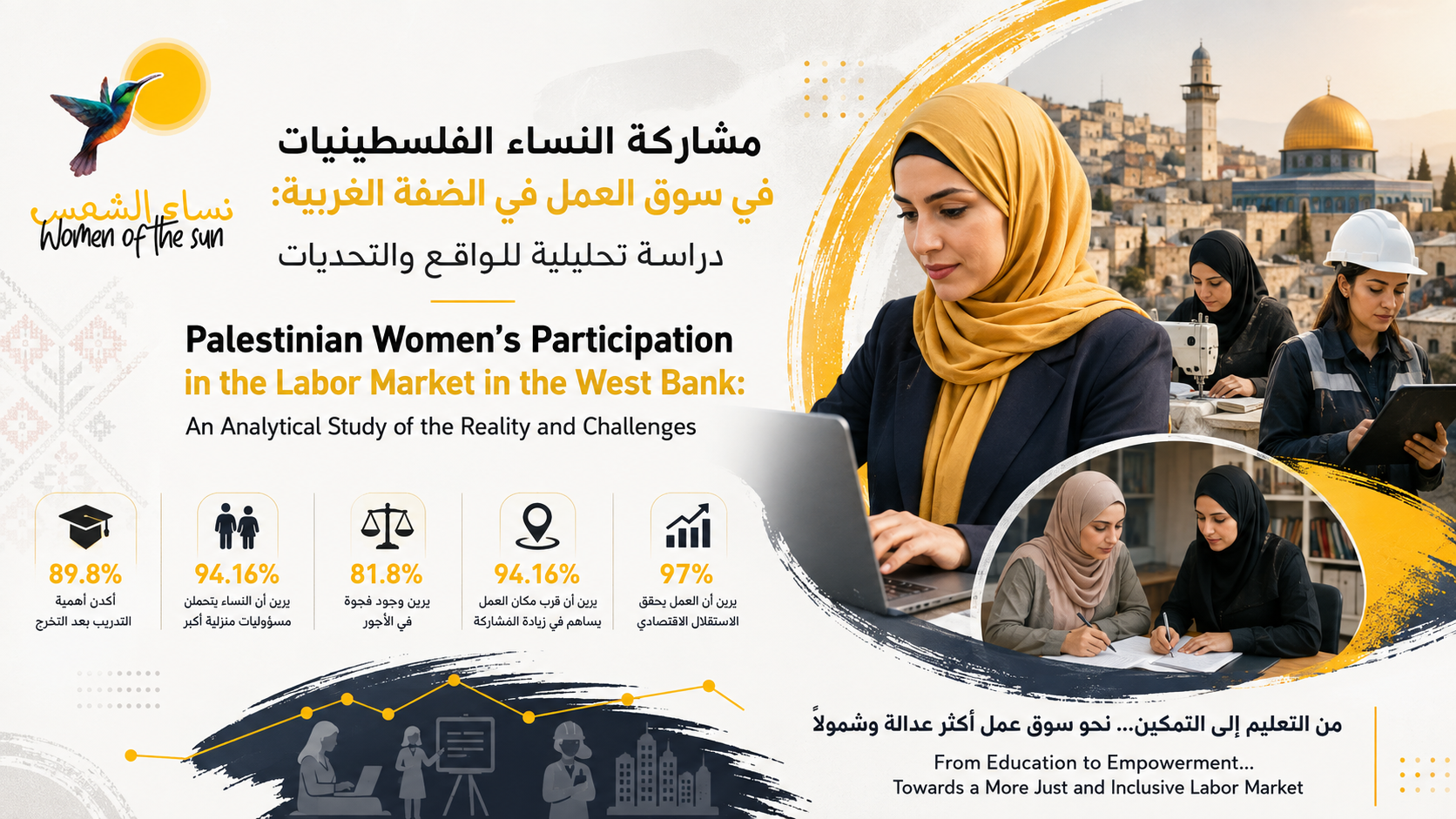
Palestinian Women’s Participation in the Labor Market in the West Bank: An Analytical Study of the Reality and Challenges
Analysis of the Survey Results
The survey results showed that Palestinian women’s participation in the labor market is influenced by a combination of interconnected educational, economic, social, and family-related factors, in addition to mobility conditions and discrimination in the labor market. The main findings can be summarized as follows:
First: Education and Transition to the Labor Market
- The results showed a high level of agreement on the importance of educational attainment in enhancing women’s opportunities to obtain employment, with 68% agreeing or strongly agreeing.
- The results revealed a gap between women’s educational qualifications and the employment opportunities available to them. Approximately 40.4% agreed or strongly agreed that available employment opportunities are not sufficiently aligned with women’s educational qualifications, while 26% remained neutral.
- The difficulty of transitioning from education to the labor market for female graduates was clearly highlighted, with 85.47% of participants agreeing or strongly agreeing that such difficulties exist.
- 82.5% of participants considered the lack of jobs appropriate to university specializations to be a factor limiting women’s participation in the labor market.
- The findings confirmed that a high level of education alone does not guarantee women employment, with 73.1% agreeing or strongly agreeing with this statement.
- There was very strong recognition of the importance of post-graduation training, with 89.8% of participants indicating that women need additional practical and vocational training to integrate into the labor market.
Second: Economic and Social Factors
- The results showed that the limited availability of employment opportunities in the West Bank affects women to a greater extent, with 92.68% agreeing or strongly agreeing.
- 89.1% of participants confirmed that the overall economic situation limits employment opportunities for women.
- The findings indicated a clear influence of social norms on women’s decisions to work, with 74.8% agreeing or strongly agreeing.
- 72.4% of participants believed that some families do not encourage women to work outside the home.
- The results showed that 79.6% believed that society’s perceptions of certain professions limit the range of career options available to women.
- In addition, 68.7% confirmed that family responsibilities affect women’s ability to participate in the labor market.
Third: Family Responsibilities and Childcare
- The results showed that 55.79% of participants considered childcare an obstacle to women’s employment, while a relatively high proportion remained neutral.
- The cost of childcare emerged as an important barrier, with 83.3% agreeing or strongly agreeing that childcare costs affect women’s employment decisions.
- There was very strong agreement that women bear a greater share of household responsibilities compared with men, with 94.16% agreeing or strongly agreeing.
- 67.9% indicated that difficulties in balancing work and family life affect women’s ability to remain in employment.
- One of the strongest findings concerned the importance of flexible working hours, with 94.8% agreeing or strongly agreeing that flexibility could increase women’s participation in the labor market.
Fourth: Discrimination and the Gender Gap
- The findings revealed a clear perception of discrimination against women when applying for jobs, with 71.68% agreeing or strongly agreeing.
- The results showed a strong perception of a gender pay gap in some workplaces, with 81.8% agreeing or strongly agreeing.
- 73.1% of participants believed that women have fewer opportunities than men for promotion to leadership positions.
- 80.34% confirmed that some employers prefer hiring men because of family responsibilities associated with women.
- The results showed that 86.95% believed that Palestinian women face greater difficulties in obtaining jobs that match their qualifications.
- Furthermore, 89.12% agreed that institutions need to implement clearer policies to ensure equality between women and men.
Fifth: Mobility and Working Conditions
- The results showed that 91.3% of participants believed that difficulties in accessing the workplace affect women’s employment opportunities.
- 90.57% considered transportation costs to be a barrier for some women.
- 79.6% indicated that the lack of safe and appropriate transportation limits women’s participation in the labor market.
- The proximity of the workplace to women’s homes emerged as particularly important, with 94.16% agreeing or strongly agreeing that employment opportunities close to home can increase women’s participation in the labor market.
- The findings also showed that 89.1% believed that remote work can provide additional economic opportunities for women.
Sixth: Women’s Economic Empowerment
- The results showed near-unanimous agreement that employment helps women achieve economic independence, with 97% agreeing or strongly agreeing.
- 94.92% confirmed that having an independent income strengthens women’s ability to make decisions.
- 93.46% believed that supporting small businesses can increase women’s economic participation.
- 95.16% considered women’s access to financing an important factor in strengthening their economic participation.
- The findings strongly confirmed the importance of vocational and digital training, with 95.6% agreeing or strongly agreeing that such training can improve women’s employment opportunities.
- 94.16% believed that women’s economic empowerment contributes to the economic and social development of society.
Seventh: Proposed Priorities for Increasing Women’s Participation
When participants were asked about the most important measures that could be taken to increase Palestinian women’s participation in the labor market, the priorities were as follows:
- More training to develop women’s skills and capacities: 54.34%
- Providing economic financing to empower women: 36.23%
- Economic empowerment of women: 21.70%
- Providing employment opportunities: 21%
- Providing a safe and flexible work environment: 11.29%
Overall Conclusion
Overall, the survey findings indicate that Palestinian women’s limited participation in the labor market is not solely related to their level of education. Rather, it results from a combination of factors, including the gap between educational outcomes and labor market needs, limited employment opportunities, economic and social factors, family responsibilities, discrimination, and mobility-related challenges.
At the same time, the findings highlight significant opportunities for strengthening women’s economic participation through investment in vocational and digital training, creation of suitable employment opportunities, support for small enterprises, improved access to financing, safe transportation, clearer institutional equality policies, flexible working arrangements, and expanded remote-work opportunities.
The most significant finding is that the transition from education to employment represents a major area of weakness. The challenge is therefore not simply women’s access to education, but their ability to translate their qualifications into stable and appropriate employment. Addressing the gap between educational outcomes and labor market needs is consequently a key entry point for increasing Palestinian women’s labor force participation.
مشاركة المرأة الفلسطينية في سوق العمل في الضفة الغربية: دراسة تحليلية للواقع والتحديات
تحليل نتائج استطلاع الرأي
أظهرت نتائج الاستطلاع أن مشاركة المرأة الفلسطينية في سوق العمل تتأثر بمجموعة مترابطة من العوامل التعليمية والاقتصادية والاجتماعية والأسرية، إضافة إلى ظروف التنقل والتمييز في سوق العمل. ويمكن تلخيص أبرز النتائج فيما يلي:
أولًا: التعليم والانتقال إلى سوق العمل
- أظهرت النتائج وجود اتفاق مرتفع على أهمية المستوى التعليمي في تعزيز فرص المرأة في الحصول على عمل، إذ بلغت نسبة الموافقة والموافقة بشدة 68%.
- كشفت النتائج عن وجود فجوة بين المؤهلات التعليمية وفرص العمل المتاحة للنساء، حيث بلغت نسبة من يرون أن فرص العمل لا تتناسب بصورة كافية مع المؤهلات التعليمية للنساء حوالي 40.4% بالموافقة والموافقة بشدة، مقابل نسبة محايدة بلغت 26%.
- برزت صعوبة الانتقال من التعليم إلى سوق العمل بالنسبة للخريجات بوضوح، حيث وافق أو وافق بشدة 85.47% من المشاركين على وجود هذه الصعوبة.
- اعتبر 82.5% من المشاركين أن عدم توفر وظائف مناسبة للتخصصات الجامعية يمثل عاملًا يحد من مشاركة المرأة في سوق العمل.
- أكدت النتائج أن ارتفاع مستوى التعليم وحده لا يضمن حصول المرأة على وظيفة، إذ بلغت نسبة الموافقة والموافقة بشدة على ذلك 73.1%.
- كانت هناك قناعة قوية جدًا بأهمية التدريب بعد التخرج، حيث رأى 89.8% من المشاركين أن النساء يحتجن إلى تدريب عملي ومهني إضافي للاندماج في سوق العمل.
ثانيًا: العوامل الاقتصادية والاجتماعية
- أظهرت النتائج أن محدودية فرص العمل في الضفة الغربية تؤثر بصورة أكبر على النساء، حيث بلغت نسبة الموافقة والموافقة بشدة 92.68%.
- أكد 89.1% من المشاركين أن الوضع الاقتصادي العام يحد من فرص تشغيل النساء.
- أشارت النتائج إلى تأثير واضح للأعراف الاجتماعية في قرار المرأة بالعمل، حيث بلغت نسبة الموافقة والموافقة بشدة 74.8%.
- يرى 72.4% من المشاركين أن بعض الأسر لا تشجع المرأة على العمل خارج المنزل.
- أظهرت النتائج أن 79.6% يرون أن نظرة المجتمع لبعض المهن تحد من الخيارات المهنية المتاحة للنساء.
- كما أكد 68.7% أن المسؤوليات الأسرية تؤثر في قدرة المرأة على المشاركة في سوق العمل.
ثالثًا: المسؤوليات الأسرية ورعاية الأطفال
- أظهرت النتائج أن 55.79% من المشاركين يرون أن رعاية الأطفال تمثل عائقًا أمام عمل المرأة، بينما بقيت نسبة الحياد مرتفعة نسبيًا.
- برزت تكلفة حضانات الأطفال كأحد العوائق المهمة، حيث بلغت نسبة الموافقة والموافقة بشدة 83.3%.
- كانت هناك قناعة قوية جدًا بأن المرأة تتحمل النصيب الأكبر من الأعمال المنزلية مقارنة بالرجل، حيث بلغت نسبة الموافقة والموافقة بشدة 94.16%.
- أشار 67.9% إلى أن صعوبة التوفيق بين العمل والحياة الأسرية تؤثر في استمرار المرأة في العمل.
- كانت من أقوى النتائج أهمية ساعات العمل المرنة، إذ بلغت نسبة الموافقة والموافقة بشدة 94.8% على أن المرونة يمكن أن تزيد مشاركة النساء في سوق العمل.
رابعًا: التمييز والفجوة بين النساء والرجال
- كشفت النتائج عن إدراك واضح لوجود تمييز ضد النساء عند التقدم للوظائف، حيث بلغت نسبة الموافقة والموافقة بشدة 71.68%.
- أظهرت النتائج وجود اعتقاد قوي بوجود فجوة في الأجور بين النساء والرجال في بعض أماكن العمل، حيث بلغت نسبة الموافقة والموافقة بشدة 81.8%.
- يرى 73.1% من المشاركين أن فرص ترقية النساء إلى المناصب القيادية أقل من فرص الرجال.
- أكد 80.34% أن بعض أصحاب العمل يفضلون توظيف الرجال بسبب المسؤوليات الأسرية المرتبطة بالنساء.
- أظهرت النتائج أن 86.95% يرون أن المرأة الفلسطينية تواجه صعوبة أكبر في الحصول على وظيفة تتناسب مع مؤهلاتها.
- كما اتفق 89.12% على حاجة المؤسسات إلى تطبيق سياسات أكثر وضوحًا لضمان المساواة بين النساء والرجال.
خامسًا: التنقل وظروف العمل
- أظهرت النتائج أن 91.3% من المشاركين يرون أن صعوبة الوصول إلى مكان العمل تؤثر في فرص المرأة في الحصول على وظيفة.
- اعتبر 90.57% أن تكلفة المواصلات تمثل عائقًا أمام بعض النساء.
- أشار 79.6% إلى أن عدم توفر وسائل نقل آمنة ومناسبة يحد من مشاركة المرأة في سوق العمل.
- برزت أهمية قرب مكان العمل من السكن بشكل كبير، حيث بلغت نسبة الموافقة والموافقة بشدة 94.16% على أن فرص العمل القريبة من السكن تساعد على زيادة مشاركة المرأة.
- أظهرت النتائج كذلك أن 89.1% يرون أن العمل عن بعد يمكن أن يوفر فرصًا اقتصادية إضافية للنساء.
سادسًا: التمكين الاقتصادي للمرأة
- أظهرت النتائج إجماعًا شبه كامل على أن العمل يساعد المرأة على تحقيق الاستقلال الاقتصادي، حيث بلغت نسبة الموافقة والموافقة بشدة 97%.
- أكد 94.92% أن حصول المرأة على دخل مستقل يعزز قدرتها على اتخاذ القرارات.
- رأى 93.46% أن دعم المشاريع الصغيرة يمكن أن يزيد المشاركة الاقتصادية للنساء.
- اعتبر 95.16% أن وصول النساء إلى التمويل يمثل عاملًا مهمًا في تعزيز مشاركتهن الاقتصادية.
- أكدت النتائج بقوة أهمية التدريب المهني والرقمي، حيث بلغت نسبة الموافقة والموافقة بشدة 95.6% على دوره في تحسين فرص النساء في سوق العمل.
- أظهرت النتائج أن 94.16% يرون أن تمكين المرأة اقتصاديًا يساهم في التنمية الاقتصادية والاجتماعية للمجتمع.
سابعًا: الأولويات المقترحة لزيادة مشاركة المرأة
عند سؤال المشاركين عن أهم الإجراءات التي يمكن اتخاذها لزيادة مشاركة المرأة الفلسطينية في سوق العمل، جاءت الأولويات كما يلي:
- التدريب أكثر لتنمية مهارات وقدرات المرأة: 54.34%
- توفير التمويل الاقتصادي لتمكين المرأة: 36.23%
- تمكين المرأة اقتصاديًا: 21.70%
- توفير فرص عمل: 21%
- توفير بيئة عمل آمنة ومرنة: 11.29%
الخلاصة العامة
تشير نتائج الاستطلاع بشكل عام إلى أن محدودية مشاركة المرأة الفلسطينية في سوق العمل لا ترتبط بمستوى التعليم وحده، بل تنتج عن مجموعة من العوامل، بما في ذلك الفجوة بين مخرجات التعليم واحتياجات سوق العمل، ومحدودية فرص العمل، والعوامل الاقتصادية والاجتماعية، والمسؤوليات الأسرية، والتمييز، والتحديات المرتبطة بالتنقل.
وفي الوقت ذاته، تسلط النتائج الضوء على فرص مهمة لتعزيز المشاركة الاقتصادية للنساء من خلال الاستثمار في التدريب المهني والرقمي، وتوفير فرص عمل مناسبة، ودعم المشاريع الصغيرة، وتحسين الوصول إلى التمويل، وتوفير وسائل نقل آمنة، وتطبيق سياسات مؤسسية أكثر وضوحًا للمساواة، وتوفير ترتيبات عمل مرنة، وتوسيع فرص العمل عن بعد.

